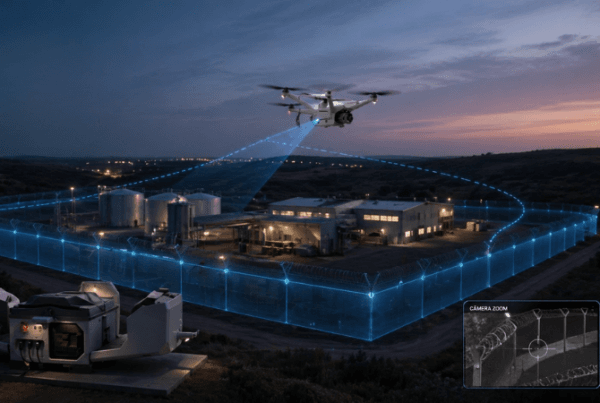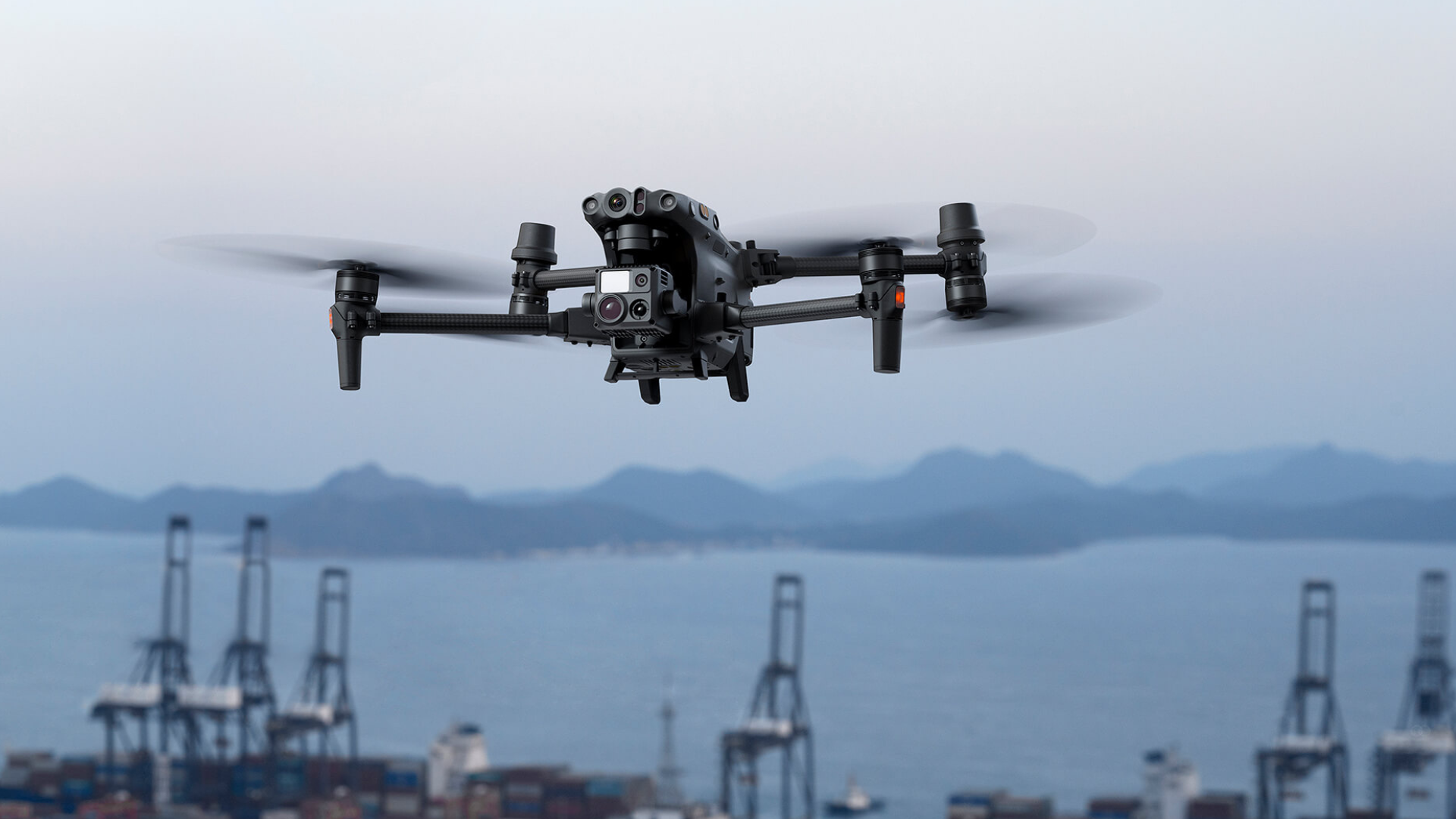
Over the past decade, the industrial adoption of drones hit a biological limitation: human vision.
The general rule of VLOS (Visual Line of Sight) flight required the pilot to maintain direct visual contact with the aircraft at all times. In practice, this limited the operational radius to about 500 meters. To inspect a 50 km transmission line or monitor a 10,000-hectare farm, the pilot had to pack the drone in a truck and relocate the base station dozens of times. Efficiency was lost to logistics.
The true Return on Investment (ROI) of drone technology has always been tied to BVLOS (Beyond Visual Line of Sight) flights, where the equipment operates kilometers away, monitored by a remote command center.
The year 2026 marks the definitive turning point for BVLOS in Brazil. But what exactly has changed in the regulation so that large corporations can finally scale their autonomous operations with legal certainty?
In this article, Horus details the new regulatory landscape and what your company needs to know to avoid falling behind—or operating illegally.
The 2026 Milestone: From Exception to Routine
Until recently, approving a BVLOS flight in Brazil was a Herculean task. Operators were required to prove to ANAC (Brazil’s National Civil Aviation Agency), almost from scratch, that the aircraft was safe enough to fly far from the pilot. It was a long, expensive, and uncertain certification process.
The major shift consolidated in early 2026—driven by the issuance of Design Authorizations for systems like the DJI Dock 2 and the Matrice 3D series—is standardization.
ANAC changed its approach: the agency validated the hardware’s safety (the manufacturer’s design). This means that if your company acquires pre-authorized equipment, half the bureaucratic red tape is already cut. The conversation shifts from “Is this drone safe?” to “Is your operation with this drone safe?”
The BVLOS Compliance Tripod in Brazil
For large corporations (Energy, Mining, Logistics, Security), operating outside the rules is not an option. The risk of fines, operational shutdowns, and voided insurance policies in the event of an incident is an unacceptable liability.
To operate BVLOS legally today, your operation must rest on a clear regulatory tripod:
1. Airworthiness and the CAER (The ANAC Factor)
Having the drone’s purchase invoice is not enough. To fly BVLOS, your aircraft needs a CAER (Special Airworthiness Certificate for RPA).
- What changed: With pre-approved equipment (Design Authorization), obtaining the CAER has become more of an administrative process than an engineering one.
- Mandatory: The aircraft must feature redundancy systems and, strictly, a homologated Anti-Collision Light to ensure the drone’s visibility to other aircraft.
2. Airspace Utilization (The DECEA Factor)
The sky is a public airway. Flying kilometers away requires coordination with manned air traffic (airplanes and helicopters). Access is granted through the SARPAS system (Brazil’s drone airspace request portal).
- Having a CAER is the “entry ticket” to request BVLOS flights in SARPAS. Without it, DECEA’s system automatically blocks any request to fly beyond the visual line of sight.
3. Operational Risk Assessment
Even with a legalized drone and reserved airspace, your company must guarantee ground safety. The operator must perform a methodical risk analysis (often based on the SORA – Specific Operations Risk Assessment methodology), evaluating:
- What happens if communication fails? (Does the drone return autonomously?)
- What is the population density of the overflown area?
- Is the remote pilot properly qualified and trained to intervene in the automation?
The End of the Corporate “Shadow Operation”
Many companies used to operate in “gray areas,” flying drones slightly beyond the visual line in isolated private properties, assuming the risk.
With the maturation of regulations in 2026 and the popularization of autonomous stations (Docks), cross-checking between flight systems and aviation authorities has become much stricter. On the flip side, the path to legalization has never been so well-paved.
Being in BVLOS Compliance is no longer a barrier; it has become a competitive advantage. Legalized companies fly 24/7. Companies operating informally keep their drones grounded at the first sign of an inspection or an ESG audit.
Horus Regulatory Consulting: Your Safe Path Forward
Understanding waypoints and heat maps is not enough. You need to understand applied Aviation Law.
Horus doesn’t just drop off a DJI Dock 2 box at your plant’s gate. We deliver Legal Certainty. Our Regulatory Consulting arm works side-by-side with your legal and operations departments to provide:
- Hardware Compliance: We supply equipment already tailored to ANAC’s requirements (including homologated anti-collision lights).
- Document Filing: We assist your company in issuing the CAER for the entire fleet.
- Operations Design: We help structure Standard Operating Procedures (SOPs) and integrate flight request workflows into SARPAS.
Leave the bureaucratic complexity to us and focus on what truly matters: the data your autonomous fleet will generate.
FAQ: BVLOS & Regulation
What is a BVLOS flight? BVLOS (Beyond Visual Line of Sight) occurs when the remote pilot cannot maintain direct visual contact with the drone, relying entirely on instruments, onboard cameras, and telemetry to command the aircraft over large distances.
Is special authorization required to fly BVLOS in Brazil? Yes. For BVLOS flights, the aircraft must hold a Special Airworthiness Certificate (CAER) issued by ANAC, and each specific flight must be pre-authorized by DECEA through the SARPAS system.
What is the CAER, and why does my fleet need it? The CAER (Special Airworthiness Certificate for RPA) is the official document attesting that the drone meets ANAC’s minimum safety and redundancy requirements. It is mandatory for any operation above 120 meters (400 feet) in altitude or during BVLOS missions.