In modern perimeter security architecture, the golden rule for any IT or Systems Manager is centralization. That is why large corporations invest heavily in advanced VMS (Video Management Systems) like Milestone, Genetec, or Digifort to concentrate thousands of cameras onto a single video wall.
However, when a company acquires drones for perimeter security or tactical patrols, it often encounters a frustrating technological bottleneck: the ultra-high-quality thermal image remains restricted to the small screen of the remote controller in the pilot’s hands.
If the pilot sees the intruder but the coordinator in the Security Operations Center (SOC) is blind, the chain of command breaks. Aerial video cannot (and should not) be siloed data.
In this article, Horus Smart Detections technically explains how to break this “hardware silo” and integrate the real-time video feed from DJI drones directly into your CCTV software using secure, native protocols.
The Problem with the “Tactical Silo” in Security
In many current operations, the communication flow during a drone emergency operates in an analog, inefficient manner. The flight operator detects an intrusion at the edge of the property and grabs a two-way radio or a mobile phone to describe what they are seeing to the command center: “Target 300 meters from the north gate, moving east.”
This model presents critical flaws:
- Decision Latency: The person making the tactical decision to dispatch a patrol vehicle or call law enforcement is the SOC coordinator, not the pilot. Describing an image over audio severely delays the response.
- Loss of Auditable Evidence: The video recorded on the drone’s SD card will only be available after landing, making it impossible for the command center to record the incident in real time on its own servers for evidentiary or legal purposes.
- Cognitive Overload: The pilot should be focused on flying safely (especially at night or in harsh weather conditions), not on narrating events.
The Technological Bridge: DJI FlightHub 2
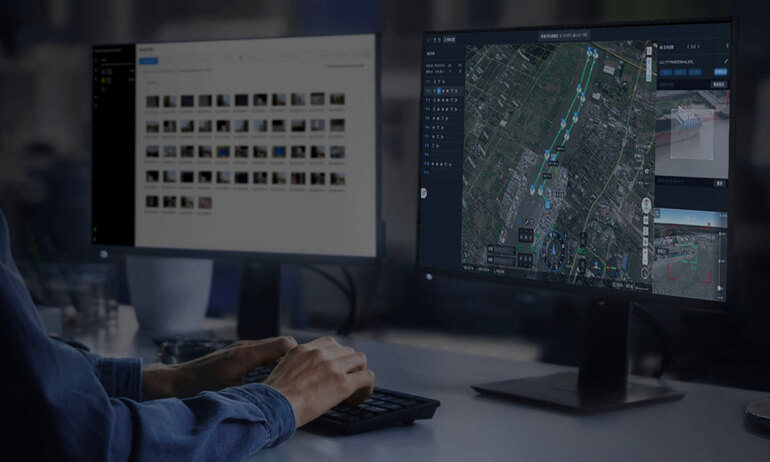
To elevate the drone from an “isolated tool” to an integrated network node (Edge IoT), the path leads through the DJI FlightHub 2 fleet management software.
This cloud-based platform acts as the perfect “middleware” between the aircraft (whether manually operated or flying from an autonomous DJI Dock) and your corporate network. FlightHub 2 receives the encrypted signal from the drone (via 4G/LTE or local network) and makes it available for redistribution.
How VMS Integration Works (Milestone, Genetec, Digifort)
For IT professionals, this integration does not require developing complex scripts from scratch. Communication relies on universal video streaming protocols widely supported by the giants of the VMS market.
The integration architecture flows as follows:
Via RTMP / RTSP Protocols
The most direct way to “inject” the drone’s video into your video wall is through RTMP (Real-Time Messaging Protocol) or RTSP (Real-Time Streaming Protocol).
- The pilot’s remote controller (e.g., DJI RC Plus) or the FlightHub 2 platform generates a streaming link (RTSP/RTMP URL).
- Your IT team adds this link to the VMS (Genetec, Milestone, Digifort) exactly as if they were adding a “Generic IP Camera.”
- The Result: The drone’s feed (including live switching between the thermal and visual cameras) appears in a native window within your VMS, recording directly to your NVRs (Network Video Recorders) and benefiting from the exact same security, data retention, and backup policies as the rest of your network.
Via API Integration (Advanced Level)
For corporations requiring deeper integrations, Horus assists in utilizing APIs (Application Programming Interfaces). This allows not only the video but also the drone’s telemetry (altitude, GPS coordinates, battery level) to be pulled into the company’s management systems. In an ideal scenario, your VMS can even georeference the drone’s exact position on an interactive 2D/3D map on the operator’s screen.
The Direct Impact: ROI in Security and IT
Integrating the drone into your CCTV ecosystem is not just a technological gimmick; it is an efficiency necessity.
- Real-Time Shared Vision: The SOC gains the “God’s eye view.” The monitoring team watches the intruder through the drone’s thermal camera directly on the command center’s screen, guiding the rapid-response vehicle with tactical precision.
- Data Security and Compliance: By channeling the recording directly to your VMS, the company guarantees the chain of custody for evidence, complying with privacy regulations (GDPR/LGPD) and strict IT governance guidelines.
- Reducing “Screen Fatigue”: The security operator does not need to learn a complex new software platform. The drone simply becomes another camera (albeit a highly mobile and intelligent one) in the viewing matrix they are already accustomed to operating daily.
Don’t Let Your Data Fly Outside the Network
Acquiring the best hardware on the market is not enough if your company’s network architecture is locked away from it. The success of a perimeter security operation with autonomous or manual drones directly depends on the fluidity with which information transitions from the air to the server.
The engineering team at Horus doesn’t just sell equipment boxes. We speak your IT department’s language.
Contact our specialists and discover how to configure the DJI Enterprise ecosystem to talk seamlessly with your Milestone, Genetec, Digifort VMS, or any other platform on the market.